The specialized engineering success engine for commercial vehicles OEMs.
Delivered through a structured, end-to-end execution model.
Triz has the capability, depth, and OEM-aligned engineering expertize to deliver across the full lifecycle, from architecture and integration through validation and release.
This is production-ready commercial vehicle engineering specialization.
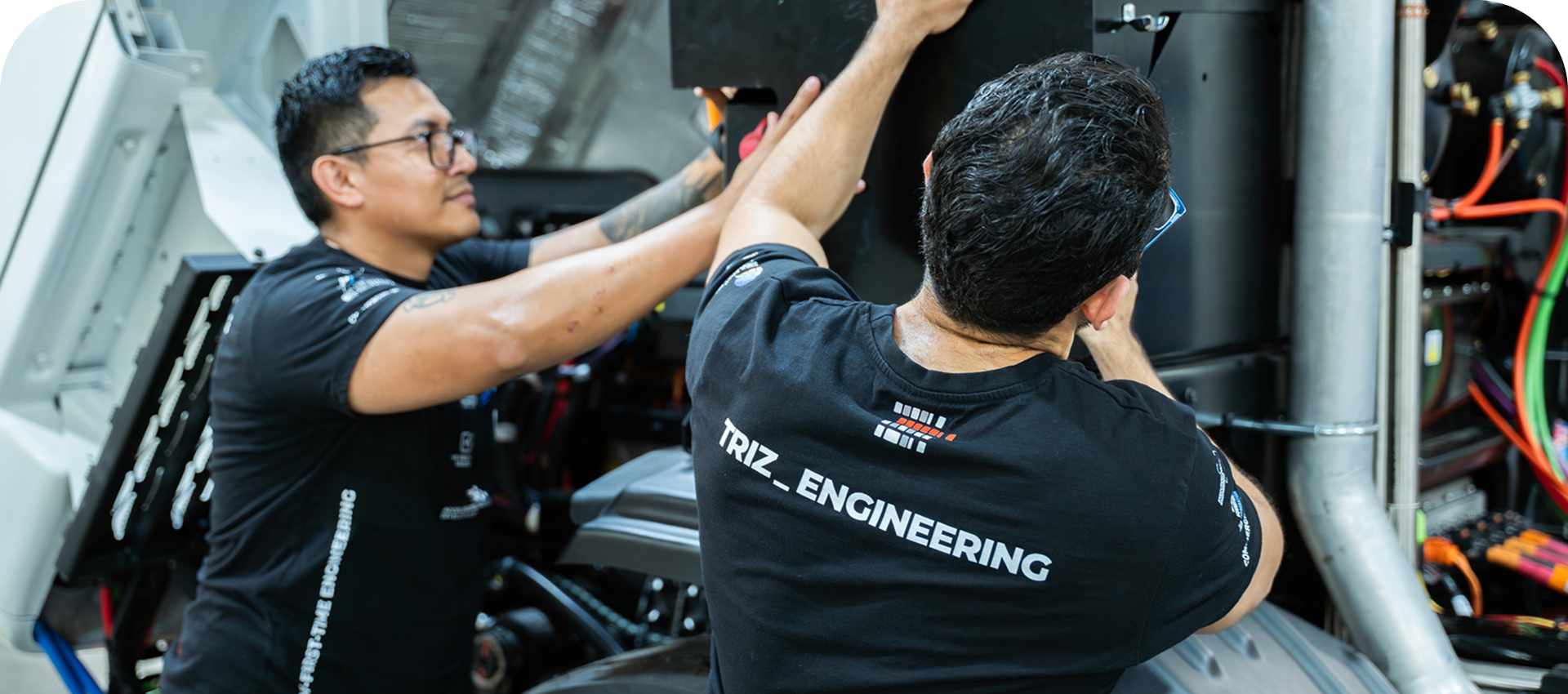
One team owns it.
Concept
Integration
Compliance
Release
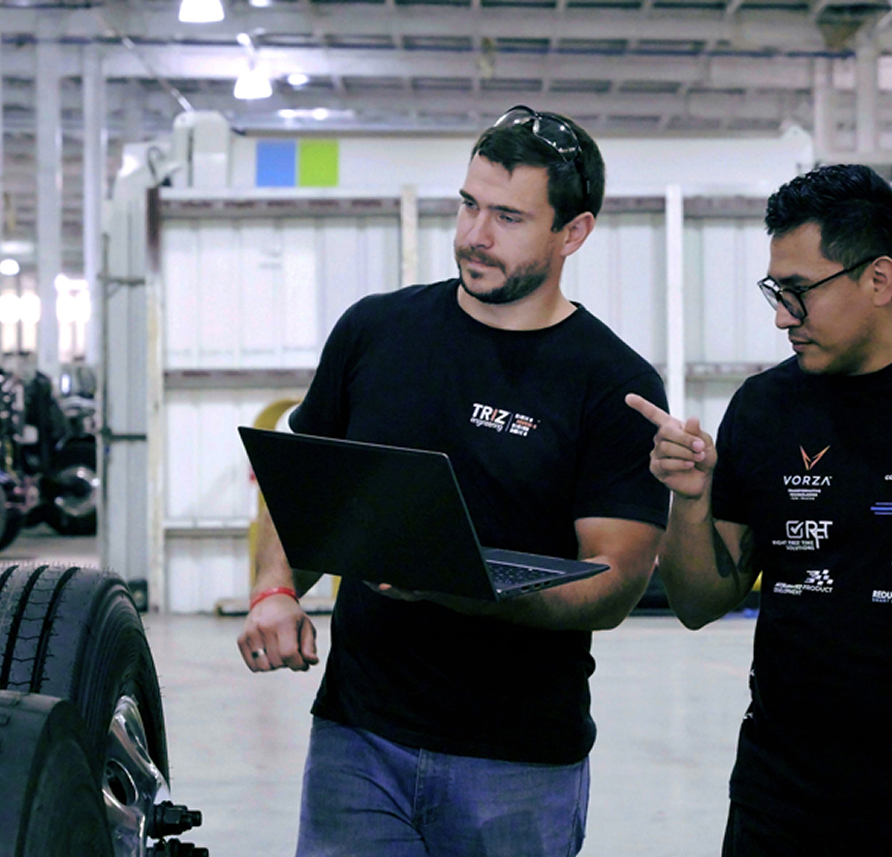
We don’t supply engineers.
We deliver complete vehicle systems.
Ownership does not reset between phases. The same team carries responsibility from concept through release.
Built for vehicle systems.
System Architecture & Concept Engineering
We define system architecture at vehicle level, ensuring clarity from the outset.
Commercial vehicle programs do not allow for late architectural correction.
Decisions made at concept stage determine integration success at launch.
- Vehicle architecture aligned to OEM platforms and standards
- System requirements and interface definition
- Packaging, layout, and platform constraints
- Concept feasibility and trade-off studies
This is where uncertainty is removed before it enters the program.
System Design & Integration
We integrate vehicle systems under a single, accountable structure.
Integration must be coordinated, controlled, and owned.
- Cross-system design coordination
- Interface alignment across subsystems and suppliers
- System-level performance alignment
- Integration planning and execution
Integration is not a phase. It is controlled from the start.
Vehicle-Level Integration
We ensure the vehicle performs as a complete system.
At vehicle level, every subsystem dependency becomes visible.
This is where programs succeed or fail.
- Mechanical, electrical, and control system integration
- Cross-functional dependency management
- Integration issue resolution
- Vehicle-level performance alignment
We maintain system-level ownership through to validation.
Electrical, Controls & Software Integration
We align electrical architecture, controls, and software into a stable system.
Electrical and control systems are central to modern commercial vehicles.
Misalignment here drives rework and instability.
- Electrical architecture development
- Control system integration
- Software and calibration alignment
- Network, diagnostics, and communication systems
Control must be structured, not corrected later.
Powertrain & Electrification Integration
We integrate propulsion systems into the full vehicle architecture.
Commercial vehicle platforms are transitioning across fuel types. Integration must maintain performance, compliance, and reliability.
- Diesel, electric, hybrid, and hydrogen systems
- Thermal management and energy systems
- High-voltage system integration
- Powertrain-to-vehicle interface alignment
Integration must work across all operating conditions, not just in theory.
Validation & Compliance
We ensure systems are validated and compliant before release.
Validation is where late-stage issues surface.
Without structure, this leads to delay and cost escalation.
- Validation planning and execution
- System and vehicle-level testing
- Regulatory compliance (emissions, safety)
- Issue tracking and resolution
Validation is controlled, not reactive.
Industrialization & Manufacturing Readiness
We align engineering with production reality.
Engineering does not end at design. It must translate into buildable, repeatable systems.
- Manufacturing feasibility and readiness
- Supplier alignment
- Build support and production validation
- Issue resolution during production
Launch success depends on production alignment.
Advanced Systems Integration
We integrate complex and evolving technologies at system level.
As platforms evolve, integration complexity increases.
Structure and discipline become more critical.
- Multi-fuel platform integration
- Electrification platform transitions
- Advanced control systems
- Model-based systems engineering
- Simulation-led validation
Complexity is managed through structure, not iteration.
Certainty must be the default.
When execution is continuous, the vehicle behaves as intended at launch.
- Interfaces align.
- Systems integrate.
- Validation confirms performance.
Engineering becomes predictable, not reactive.